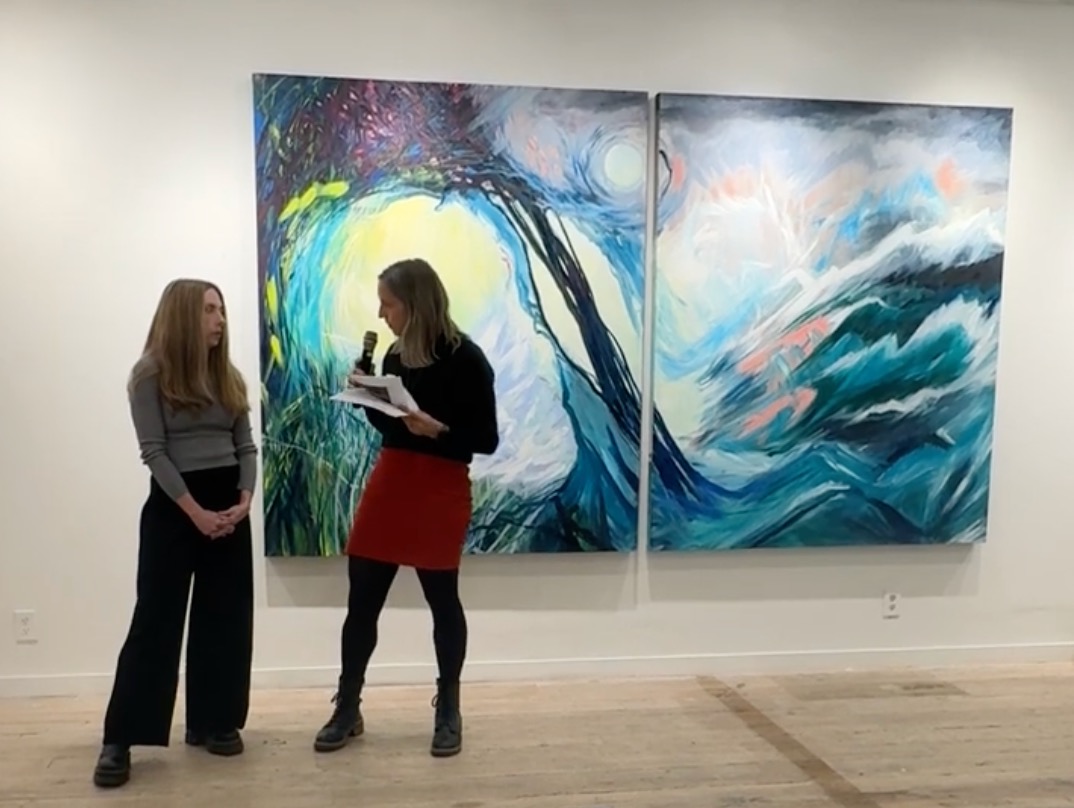
Informal video of artist talk at The Art Base
Informal video of artist talk at The Art Base
Once When I Was You
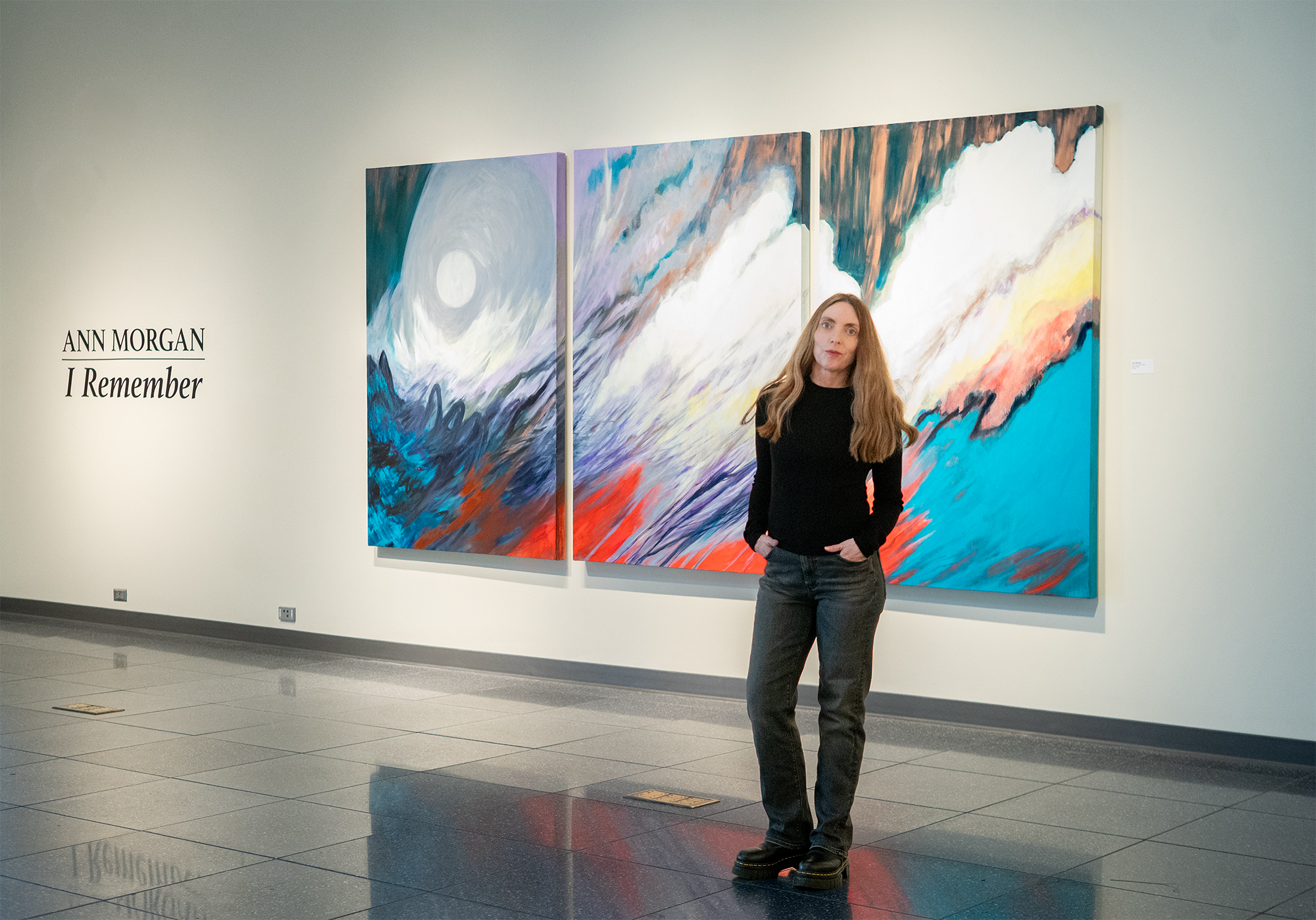
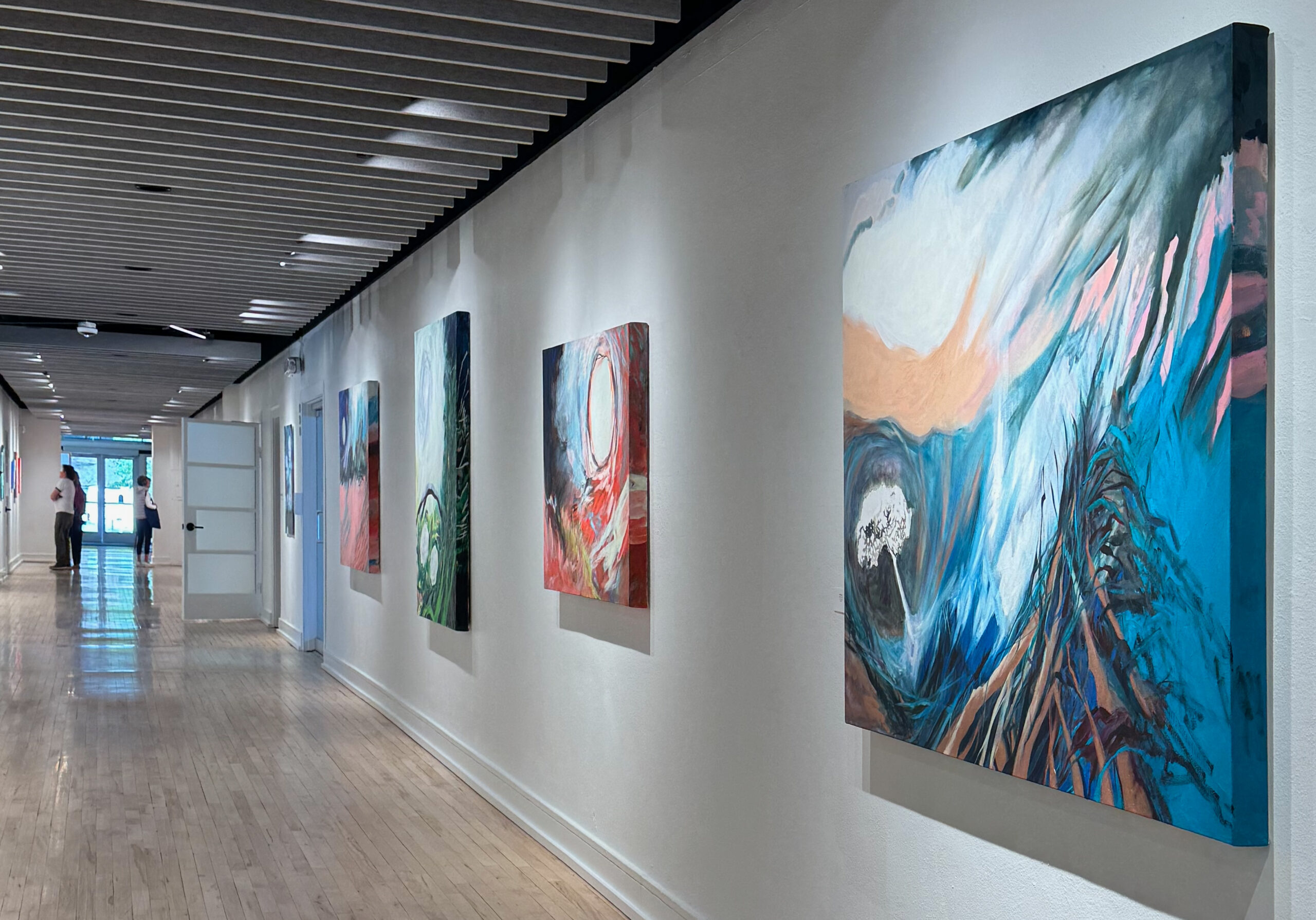
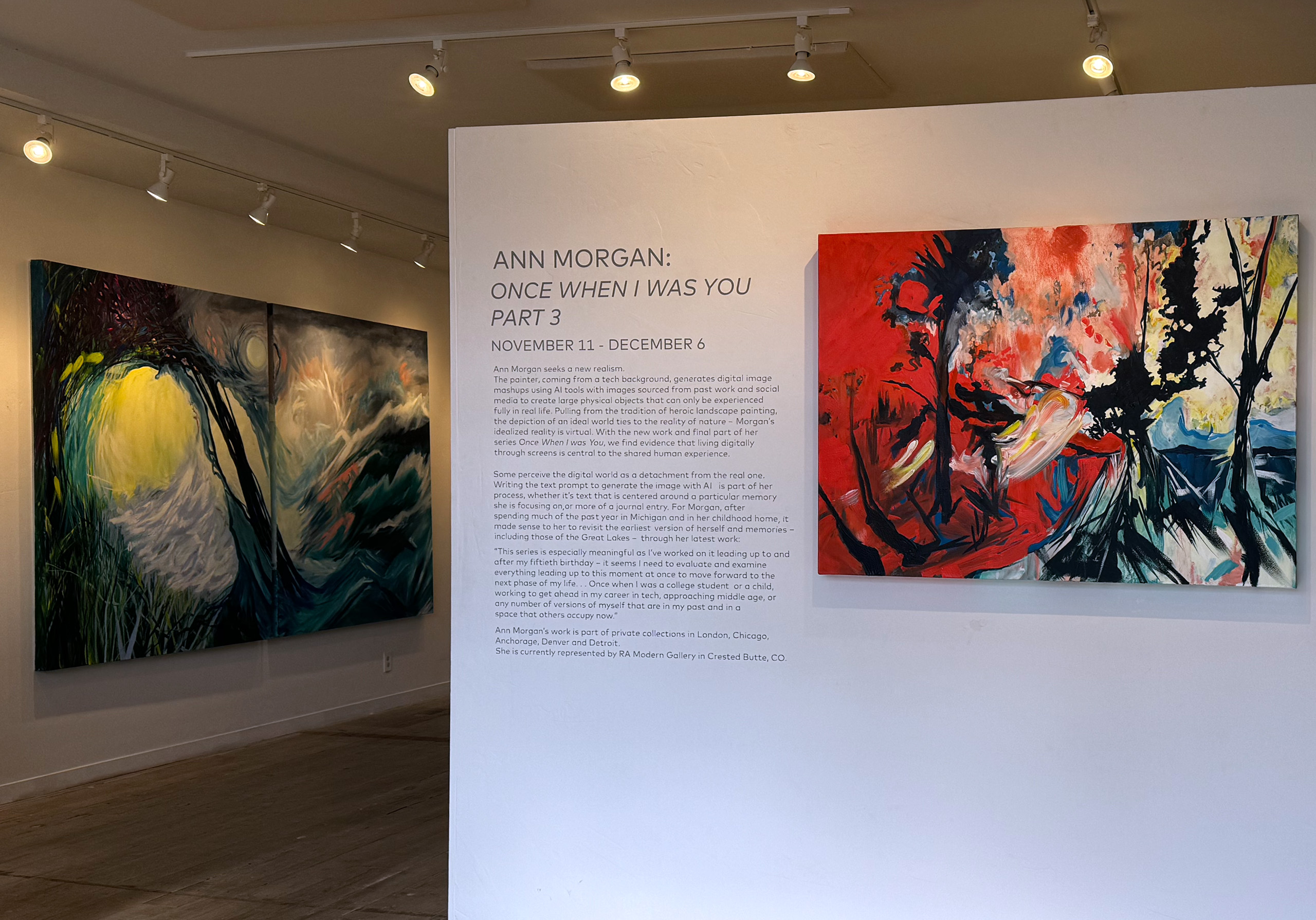
Ann Morgan’s exhibition Once When I Was You — the final iteration of a series begun around her 50th birthday in early 2023 — brings together large-scale oil paintings that merge traditional landscape conventions with her background in technology. Presented at The Art Base in Basalt, Colorado, the show features work that draws on Morgan’s dual identity as painter and technologist.
Morgan begins each piece with digital sketches made on a tablet, often drawing on an AI model trained on her own images. These are layered in Photoshop with personal memories and found imagery from social media, then projected onto large canvases in a darkened studio. Working in the dark allows her to operate at scale and introduces a productive unpredictability — some paintings are reprojected multiple times, accumulating layers within layers. She drew a connection to Rothko, who also worked in darkness to achieve luminosity. Though the digital process informs every stage, the final work is emphatically physical, dependent on the surface qualities that paint alone can provide.
The work captures an idealized virtual reality now lived through screens — a borrowed language from social media and personal memory, translated into paint.
— Ann Morgan
Color in Morgan’s work arrives through memory: a neon pink standing in for childhood, a Tiffany blue evoking a specific emotional register, iridescent paints recalling the way moonlight appeared from her childhood bedroom window. Many color decisions begin with saturation filters applied in Photoshop — pushing hues past naturalism before translating them into oil. Morgan noted that different viewers bring their own memories to the paintings, and that this openness is central to the work’s intent.
Morgan described her practice in terms of a “new realism” — one that treats the digital and virtual worlds as a legitimate source of observed reality. Where earlier landscape painters looked out windows, she looks at screens, then translates what she finds there into paint with the same fidelity to experience. She also paints the edges of her canvases deliberately, giving them a sculptural presence that distinguishes them from the flat conventions of traditional painting.
Throughout the conversation, Morgan returned to texture as something irreducible — the quality of her work that digital tools cannot replicate. The layering of oil paint, the built-up surface, the way light moves across a physical canvas: these are not incidental to the work but its point. The digital tools are a means of arrival. The painting itself is where the work lives.